
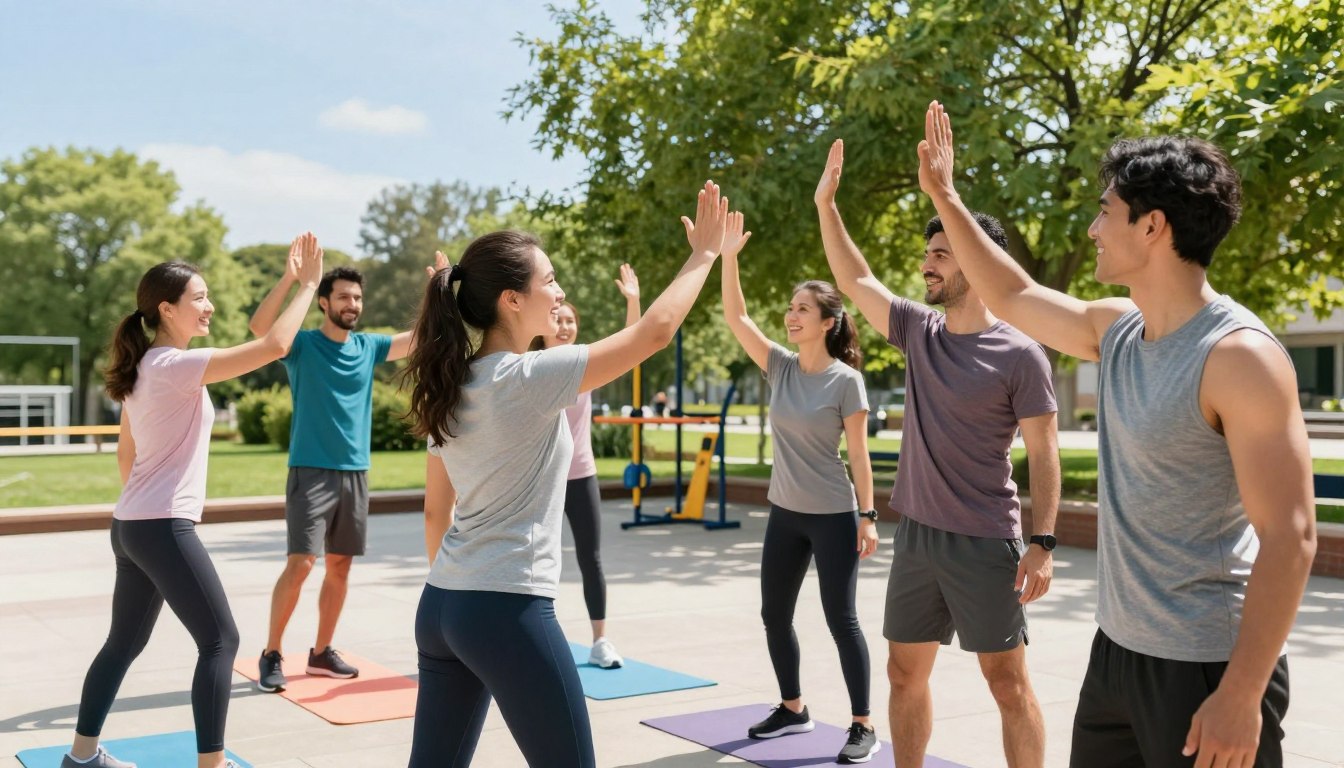
Did you know that you are nearly three times more likely to reach your fitness goals when working out with friends? Recent research suggests that social support boosts success rates by over 200 percent. This powerful shift in focus transforms personal struggles into shared victories.
Achieving lasting success becomes much easier when we tap into group health motivation. By joining forces with peers, we create a supportive environment that keeps everyone moving forward. This is more than just a workout; it is about building a community.
Modern wellness programs are now focusing on this social aspect to drive better results. These initiatives encourage people to support each other through every step of their journey. Embracing collective wellness ensures that no one has to face their path to vitality alone.
Key Takeaways
- Community support triples the likelihood of achieving fitness goals.
- Shared activities reduce the mental burden of training alone.
- Social accountability fosters consistent and beneficial daily habits.
- Peer encouragement creates a strong sense of belonging and safety.
- Coordinated efforts make physical activities more fun and engaging.
- Success rates improve when people join a supportive community.
1. Understanding Why Group Health Motivation Works
Understanding the mechanics behind group health motivation is crucial for achieving lasting wellness. When individuals come together with a common goal, they can tap into a collective energy that drives success. This synergy is not just about being part of a group; it’s about leveraging the psychological benefits, advantages, and dynamics that come into play.
1.1 The Psychological Benefits of Collective Wellness
Being part of a group health initiative can have profound psychological benefits. It fosters a sense of belonging and support, which are critical for motivation. When individuals feel connected to others working towards the same goal, they’re more likely to stay committed.
Social support is a key factor here. It not only provides emotional backing but also helps in tracking progress and celebrating successes. This collective environment encourages individuals to push beyond their personal limits.
1.2 Proven Advantages of Group Health Programs
Group health programs have been shown to offer numerous advantages. They promote accountability, as individuals are more likely to adhere to their health goals when they’re part of a group. Additionally, these programs can be tailored to meet the diverse needs of participants, making them more effective.
- Increased motivation through shared goals
- Improved adherence to health regimens
- Enhanced overall well-being
1.3 Recognizing Common Group Dynamics Challenges
While group health motivation can be highly effective, it’s not without its challenges. Common issues include differing levels of commitment among participants and potential conflicts within the group. Recognizing these challenges early on can help in implementing strategies to mitigate them.
By understanding these dynamics, group leaders can foster a more cohesive and supportive environment, ensuring that the group remains motivated and focused on its health goals.
2. Core Group Health Motivation Strategies That Drive Results
To drive results in group health initiatives, several key strategies can be employed. These strategies are designed to foster a supportive environment that encourages individuals to work together towards their health goals.
2.1 Create Compelling Shared Goals Everyone Can Support
Creating shared goals is fundamental to group health motivation. When everyone is working towards the same objectives, it builds a sense of unity and purpose.
2.1.1 Use the SMART Framework for Group Objectives
The SMART framework is a useful tool for setting effective goals. SMART stands for Specific, Measurable, Achievable, Relevant, and Time-bound. By using this framework, groups can create clear and actionable objectives that everyone can support.
- Specific: Clearly define what you want to achieve.
- Measurable: Quantify your goals so progress can be tracked.
- Achievable: Ensure the goals are realistic and attainable.
- Relevant: Align the goals with the group’s overall mission.
- Time-bound: Set deadlines for achieving the goals.
2.2 Build Multi-Layered Accountability Systems
Accountability is a crucial element of group health motivation. By building a system that holds individuals accountable, groups can maintain momentum and motivation.
2.2.1 Design Effective Peer-to-Peer Check-Ins
Peer-to-peer check-ins are an effective way to build accountability. These check-ins provide an opportunity for individuals to share their progress, receive support, and stay motivated.
- Schedule regular check-ins to maintain consistent communication.
- Encourage open and honest sharing of progress and challenges.
- Use these check-ins to provide support and guidance.
2.3 Design Reward and Recognition Programs
Reward and recognition programs can be a powerful motivator for groups. By acknowledging and rewarding achievements, groups can reinforce positive behaviors and motivate individuals to continue striving towards their goals.
| Reward Type | Description | Impact |
|---|---|---|
| Individual Rewards | Recognize individual achievements and milestones. | Boosts personal motivation and satisfaction. |
| Team Rewards | Acknowledge team achievements and milestones. | Fosters a sense of unity and teamwork. |
3. Step-by-Step Implementation Guide for Your Group
To unlock the full potential of group health motivation, a structured implementation plan is essential. This guide will walk you through the critical steps to create a successful and engaging wellness program for your group.
3.1 Step 1: Conduct a Comprehensive Needs Assessment
The first step in implementing a group health motivation program is to understand the specific needs and goals of your participants. This involves gathering data through surveys, interviews, or focus groups to identify the health concerns, fitness levels, and motivation drivers of your group members.
A thorough needs assessment helps tailor the program to meet the unique requirements of your group, ensuring higher engagement and better outcomes.
3.2 Step 2: Design an Inclusive and Flexible Program
Designing an inclusive program is crucial for maintaining high participation rates. This involves creating a variety of activities and challenges that cater to different fitness levels and health goals.
3.2.1 Create Modification Options for All Participants
To ensure that everyone can participate, it’s essential to offer modification options for exercises and challenges. This could include alternative exercises for those with physical limitations or different intensity levels for activities.
“Inclusivity is key to a successful group health motivation program. By providing options, you empower all participants to engage at their own level.”
3.3 Step 3: Establish Clear Communication Systems
Effective communication is the backbone of any successful group health motivation program. This involves setting up regular check-ins, using group messaging apps, or creating a dedicated program website.
Clear communication helps to keep participants informed, motivated, and connected throughout the program.

3.4 Step 4: Launch with an Engaging Kickoff Event
Launching your program with an engaging kickoff event can set a positive tone and generate excitement among participants. This could be a physical activity, a health fair, or a motivational seminar.
“The way you launch your program can significantly impact its long-term success. Make it memorable and engaging.”
A well-planned kickoff event not only motivates participants but also fosters a sense of community and shared purpose.
4. Maintaining Long-Term Motivation and Handling Setbacks
Maintaining motivation over time is essential for achieving lasting wellness in group settings. As groups progress on their health journeys, it’s natural for enthusiasm to wax and wane. The key to sustained success lies in implementing strategies that keep the group engaged and motivated.
Keep Activities Fresh and Engaging
To prevent boredom and stagnation, it’s crucial to periodically refresh the group’s activities. This can be achieved by:
- Introducing new exercises or wellness challenges
- Inviting guest speakers to share their expertise
- Organizing social events that promote bonding among group members
- Utilizing different venues or environments for meetings
Variety is key to maintaining interest and participation. By incorporating a mix of activities, you can cater to different preferences and keep the group dynamic.

Identify and Address Motivation Dips Quickly
Despite the best efforts, groups may experience motivation dips. It’s essential to recognize these dips early and address them proactively. Strategies include:
- Conducting regular check-ins with group members to gauge their motivation levels
- Adjusting the program based on feedback received
- Providing additional support or resources during challenging times
- Celebrating small victories to boost morale
Harness the Power of Group Success Stories
Success stories are a powerful motivator. Sharing stories of progress and achievements can inspire others and reinforce the group’s collective commitment to their health goals. To leverage success stories effectively:
- Encourage members to share their experiences and progress
- Highlight these stories in group communications or meetings
- Use these stories to illustrate the tangible benefits of the group’s efforts
By implementing these strategies, groups can maintain a high level of motivation and navigate setbacks effectively, ensuring long-term success in their health initiatives.
5. Conclusion
Group health motivation is a powerful tool for achieving lasting wellness. By understanding the psychological benefits of collective wellness and implementing effective strategies, individuals can work together towards a common goal.
The benefits of group health motivation are clear: it fosters a sense of community, promotes accountability, and drives results. By creating shared goals, building accountability systems, and designing reward programs, groups can unlock their full potential.
To maintain long-term motivation, it’s essential to keep activities fresh and engaging, address motivation dips quickly, and harness the power of group success stories. By doing so, individuals can experience the collective wellness benefits that come from working together towards a healthier future.
By applying these strategies, groups can achieve lasting wellness and improve overall health outcomes. The key is to create a supportive environment that encourages individuals to work together towards a common goal.